

This is the most important chart today:
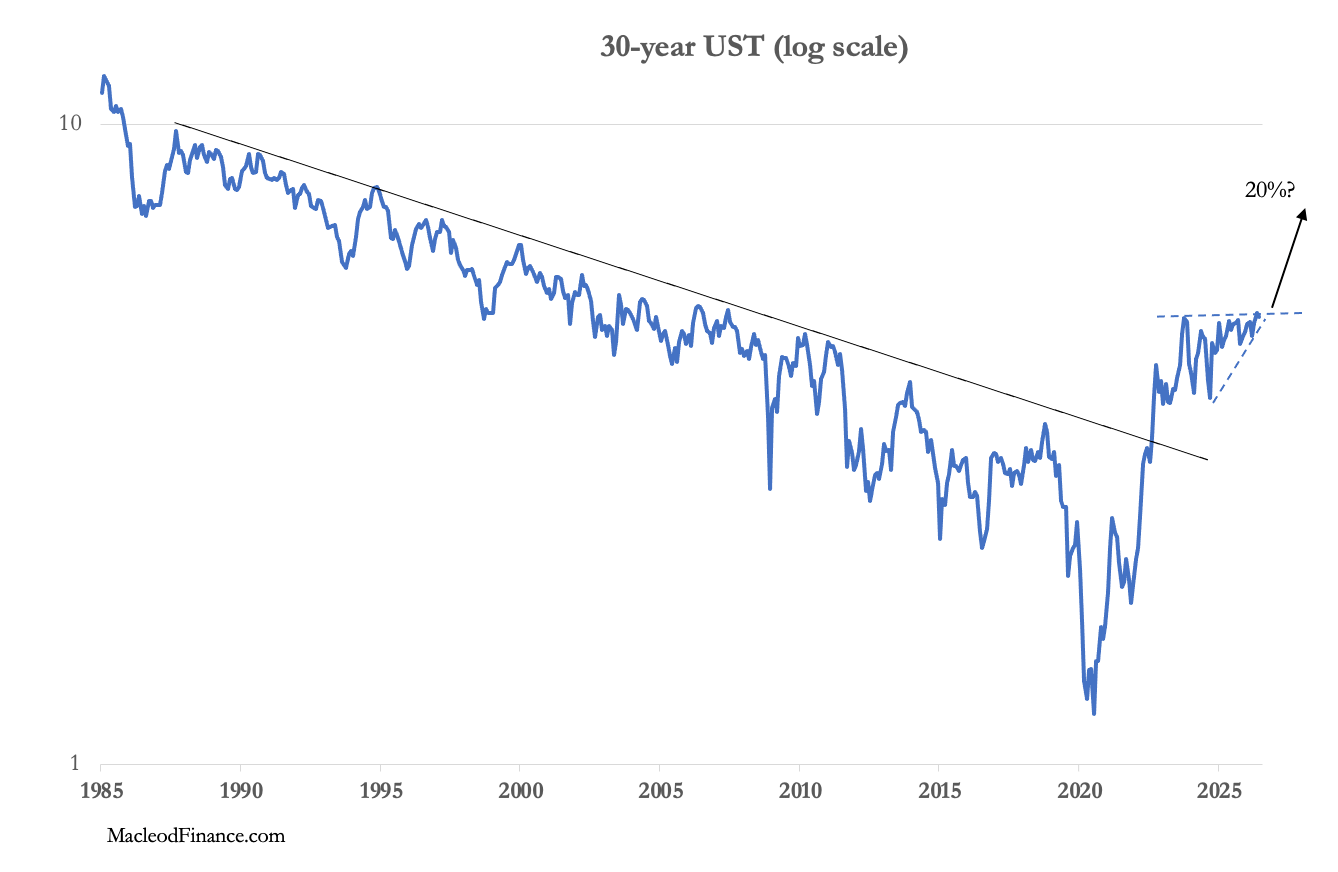
In this article, we look at why bonds and equities are certain to lose significant value, probably rapidly. And we compare the situation today with how gold performed in 2008—2009, which was the last major financial crisis. That was a private sector leverage crisis. Today, we have a government debt crisis.
Introduction
An optimistic jobs report on Friday was like a volley of grapeshot over markets. A fear factor crept into equities about the likely course of interest rates. The fear is that if the economy is strong, then with Hormuz shut and driving prices higher, bond yields might rise. Just a hint of this danger led to a near 5% fall on the Nasdaq 100 index, indicating how febrile the equity bubble has become.
It also exposed the shallow depths of thinking by equity investors. Comments by President Trump on his Truth Social are all too common in investor thinking: “With a great jobs report, like just announced, stocks should go up, not down… That’s the way it was for 200 years. Growth does not mean inflation! How else can a country attain GREATNESS??? President DJT”.
Like nearly everyone else, the president appears blind to the inflation danger. For a start, inflation of prices is a misnomer. When prices across the board rise, it reflects a fall in the currency’s purchasing power. Clearly, as a consequence of the closure of Hormuz shortages of oil, gas, and downstream products such as urea, sulphur, fertilisers, sulphuric acid, and helium to mention a few will lead to a global economic slump unless central banks fire up their printing presses. Inevitably, government revenues will collapse while welfare costs increase. Furthermore, the political imperative will be to support financial markets and slumping economies to prevent a thirties-style global depression. Without a gold standard to underwrite the dollar’s value and a US government debt to GDP of about 125%, the dollar will face collapse if these policies are followed. That is almost a political certainty.
US government debt-to-GDP was only 32% during the last major oil shock in late-1973. It led to inflation of 11% the following year and 10-year treasury note yields of 9%. All G7 nations faced similar difficulties, with the UK and Japan worst affected as the table below illustrates.
