

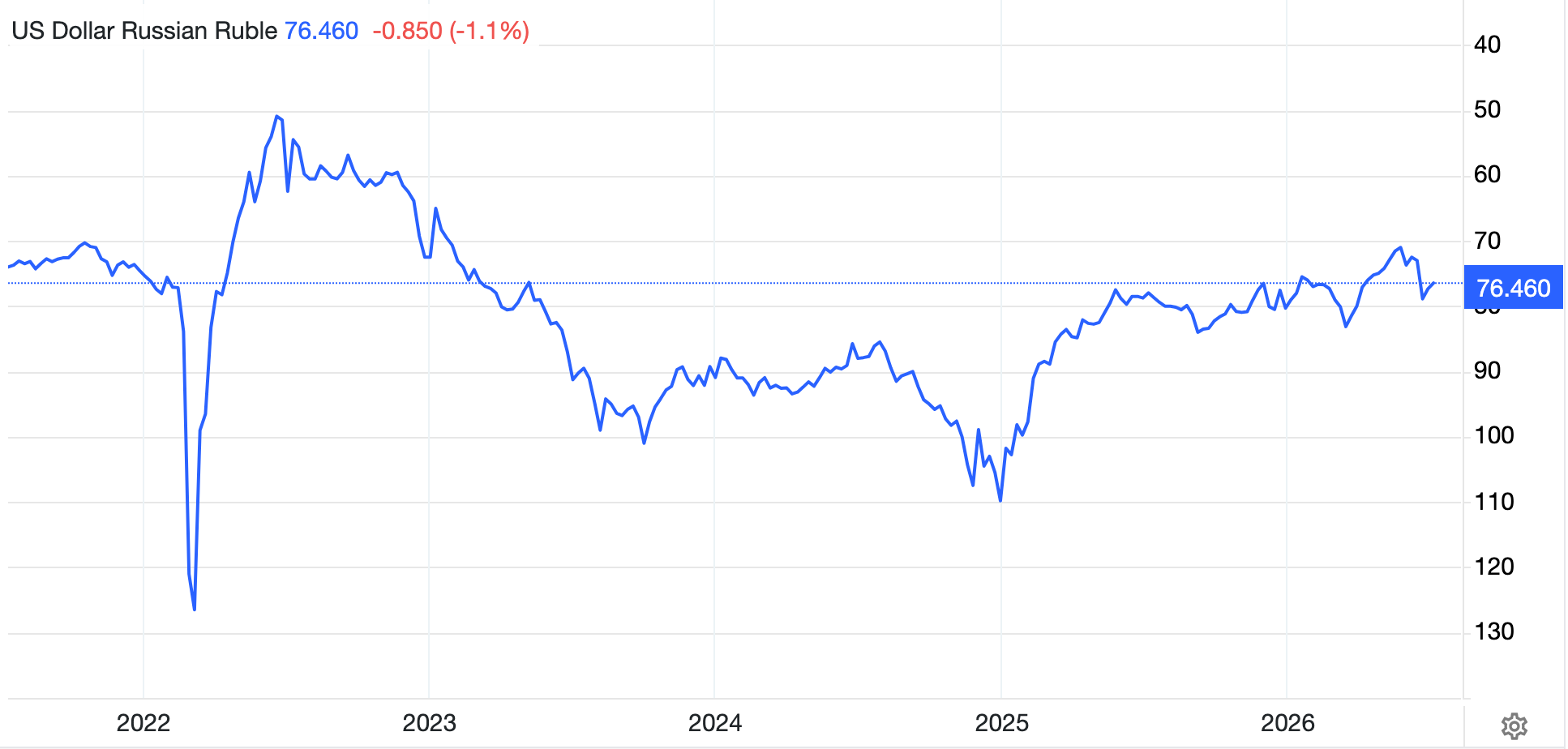
Ahead of the NATO meeting in Ankara this week, Ukraine stepped up its attacks on Russia, and economists have been disparaging its war economy. But as the chart of the rouble rate in US dollars indicates, the currency has been remarkably stable. However, Russia’s is a war economy, and 10-year bond yields have risen to 16.7%. And Russia’s debt to GDP is only 18%. Russia’s economy is probably more robust than those of her European enemies, whose threats verge on hysteria.
The UK, France, and Germany are increasingly belligerent. For the moment, they are funnelling arms, intelligence, and military assistance through Ukraine. Ukraine is deploying drones into Moscow, St Petersburg, and targeting oil refineries presumably in an attempt to turn the Russian public against their leadership.
Outside Russia, it is impossible to assess the degree to which this is working. What we do know is that some senior figures are getting edgy with Putin’s patient approach and the likelihood of attacks against weapon production facilities outside Ukraine appears to be increasing. From Russia’s point of view, surely it is alarming to see European NATO members gearing up their defence capabilities. For now, stocks of ordinance are badly depleted by support for Ukraine so far, and American supplies have been compromised by the war against Iran.
