

In recent days, the yield on the 10-year US treasury note has broken out above its three-year consolidation phase, confirmed by its short- and longer-term moving averages in bullish sequence: that is to say, bearish for the price. This is despite Bessent’s intervention at the 4.7% yield level on the 10-year note.
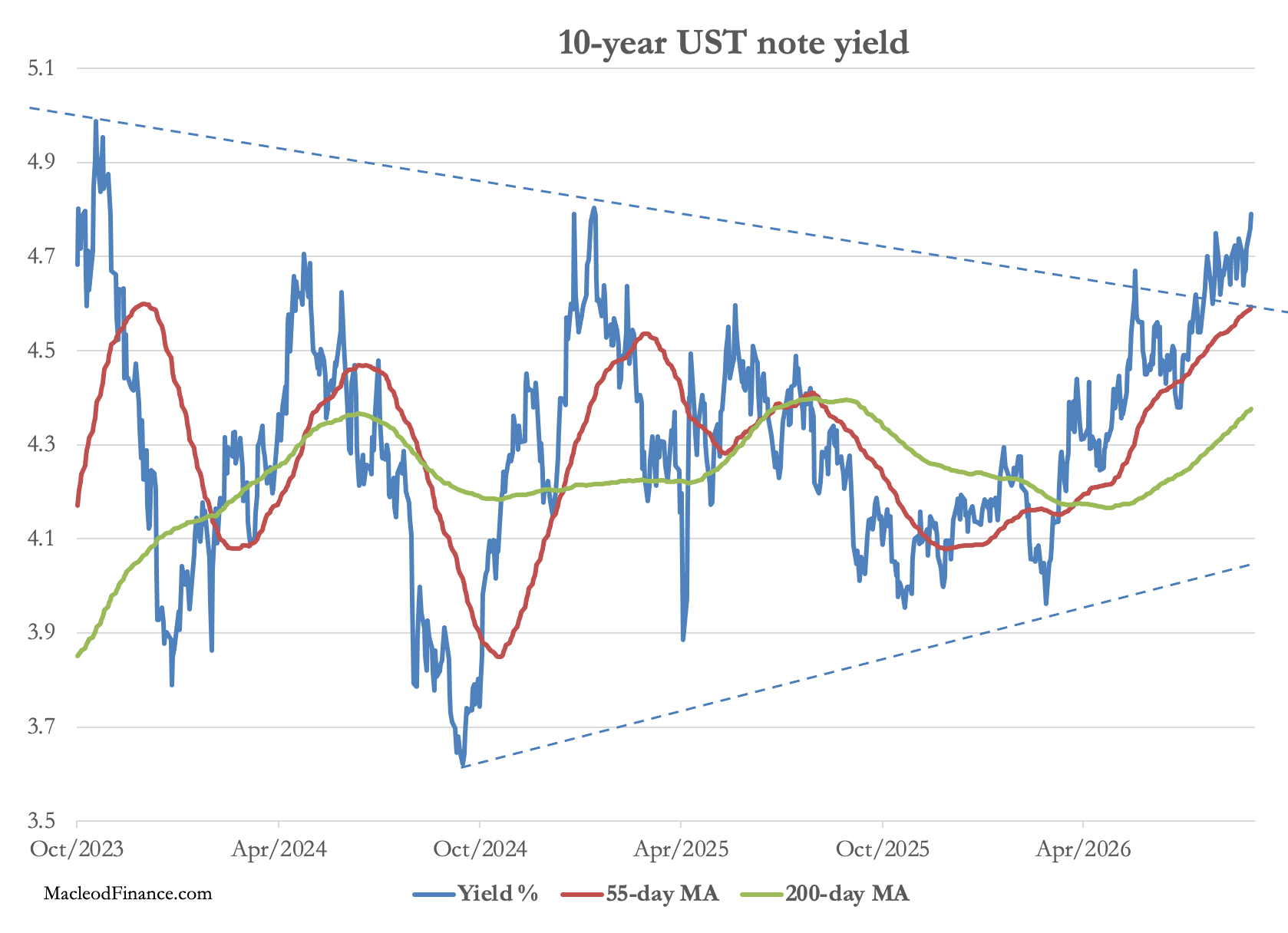
While the yield has yet to exceed the 5% level, it appears to be a hurdle which will be easily overcome because these chart formations, commonly termed pennants after their shape, tend to mark the half-way point in an ongoing trend. This is best illustrated in the chart of the long bond, which is already embarking on the next leg higher. This is next:
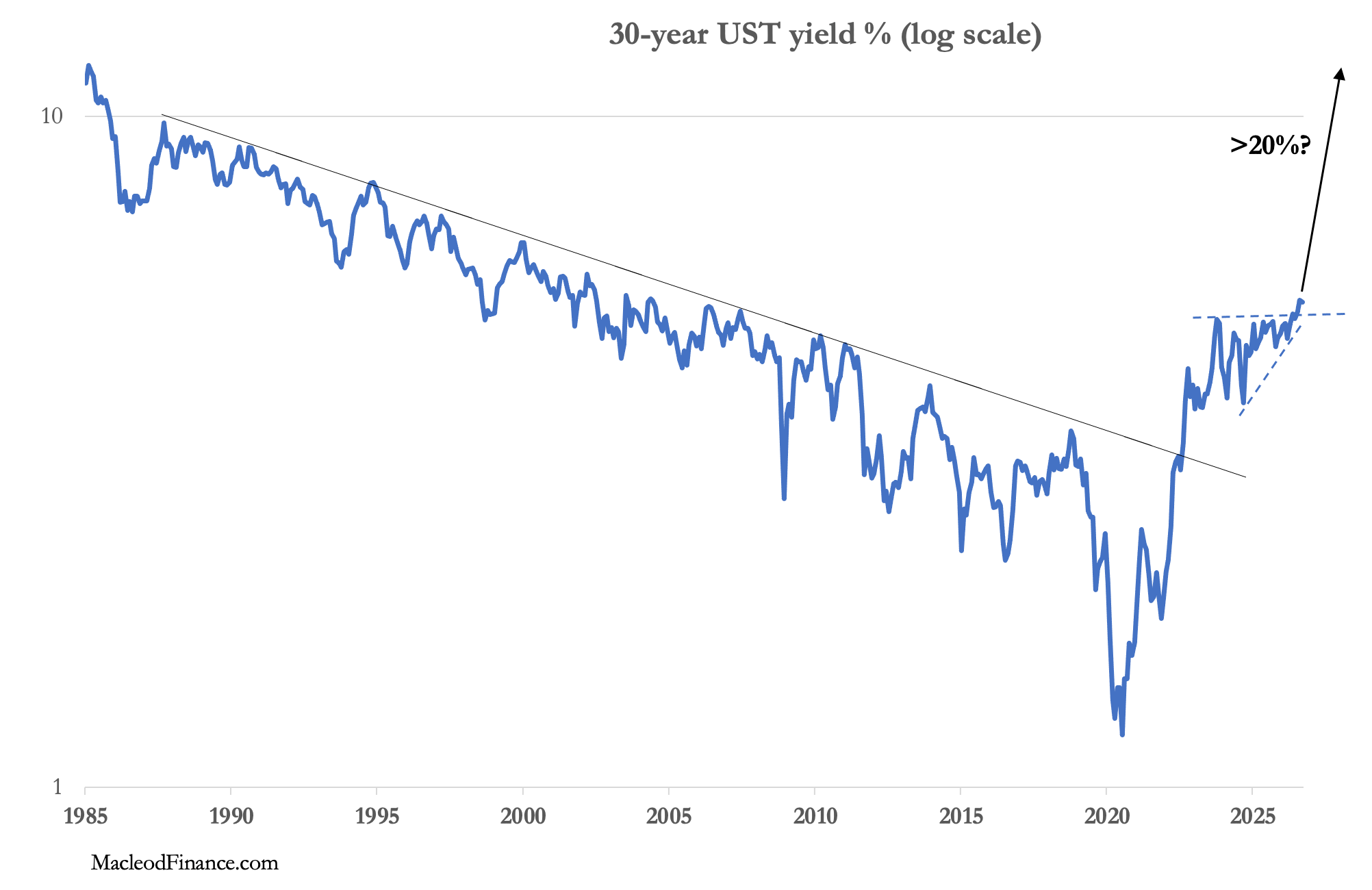
Note that this chart is on a logarithmic value scale, illustrating how the percentage move of 250% from the 1.9% low to 5% could run to well over 10% from the breakout over the same brief timescale. The fundamental justification is a combination of the Hormuz and Bab el-Mandab blockades, the debt trap sprung on US government finances, the end of the petrodollar leading to surplus dollar balances in foreign hands, and the global loss of confidence in the dollar from an American geopolitical defeat.
This move to far higher bond yields will almost certainly trigger massive selling of the dollar, a point addressed later in this article. It is a racing certainty that the Secretary Bessent will order the suspension of trading in bonds and equities, as his predecessor William MacAdoo did in July 2014. That time, Wall Street remained shut until the following December. A prolonged market closure today to stop foreign and domestic selling is a real possibility. Don’t get trapped, because if it happens, markets will open considerably lower and investors will face large losses on their investments and on the currency as well.
I shall write about this possibility in a future post.
