

“The fact of the matter is that the emerging crisis is unlike those which have come before. Since the Second World War, crises have always been in the private sector followed by governments riding to the rescue. This one is in governments themselves, and there is no one to rescue them.”
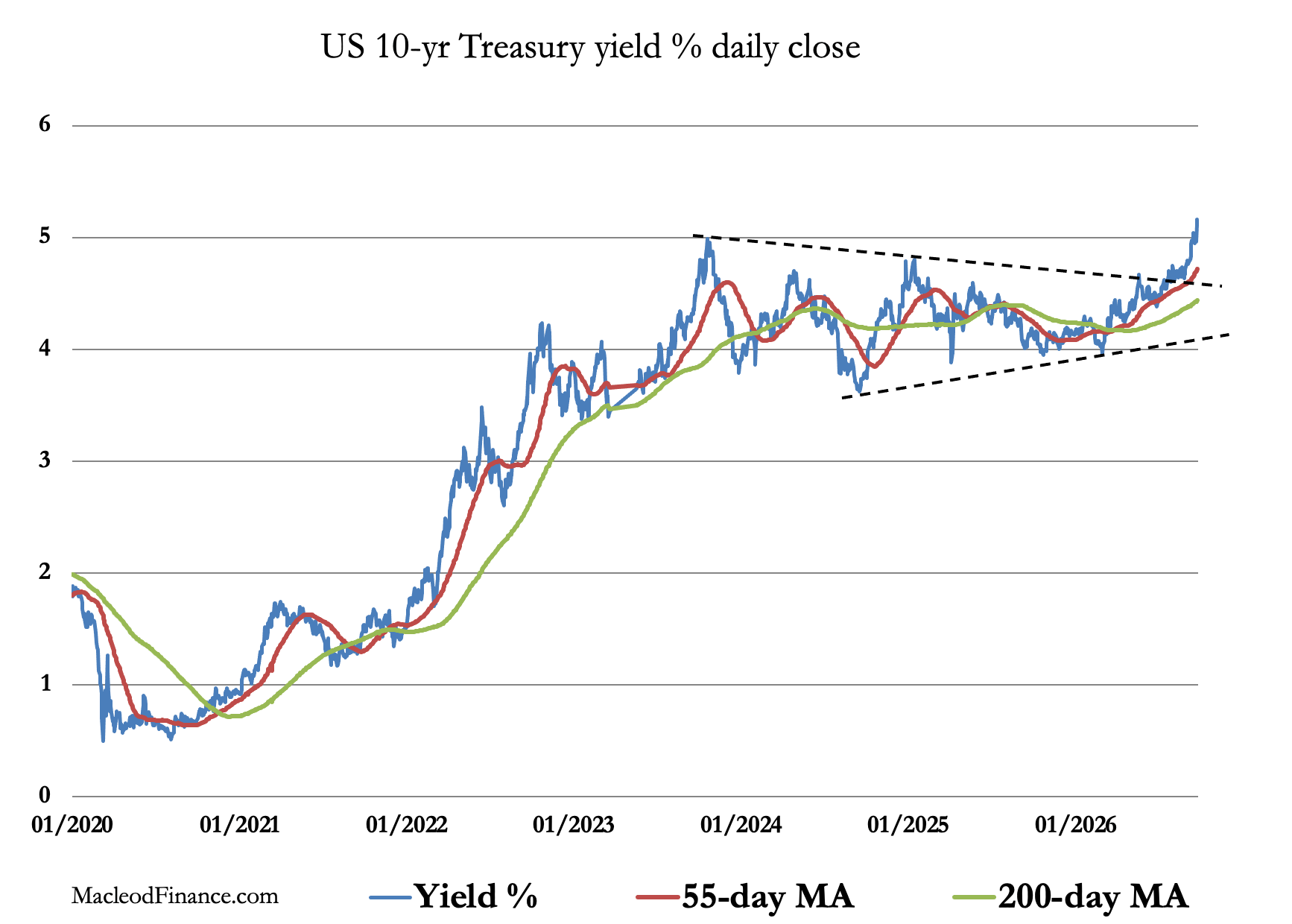
It is now clear that the US government has a funding problem. And it extends also to all the other G7 members, whose debt funding costs are all rising in unison. To put it into context, at current yields debt interest on US government bonds is the equivalent of half the USG’s current on-budget revenue. The only mitigations are that there is debt yet to mature with lower yields, and that about $8 trillion of the gross $40+ trillion is owed between government departments.
The US government is hostage to yet higher interest rates and bond yields, driven by a mixture of geopolitical factors and concerns over the inevitable slump in business activity together with soaring prices triggered by the crisis in the Middle East. The danger is that they are combining to set a debt trap for government finances, where higher rates beget yet higher rates. This is reflected in the long-term chart of the US long bond:
